Summary: The Atomic Songbirds make music about artificial intelligence: original atompunk jazz, prog, funk, and pop exploring AI ethics, robot consciousness, and what happens when the machines we build start to feel. Here's why songwriting is one of the most honest ways to process the AI revolution.
Why Write Music About AI?
We're living through a moment that will define the next century. Artificial intelligence isn't a distant sci-fi concept anymore. It's in our phones, our cars, our hospitals, our creative tools. It's writing code, generating images, and holding conversations that feel eerily human. And yet, for all the think pieces and congressional hearings, I think music remains one of the most honest ways to process what's actually happening to us.
That's why I write music about AI. Not because it's trendy. Because it's necessary.
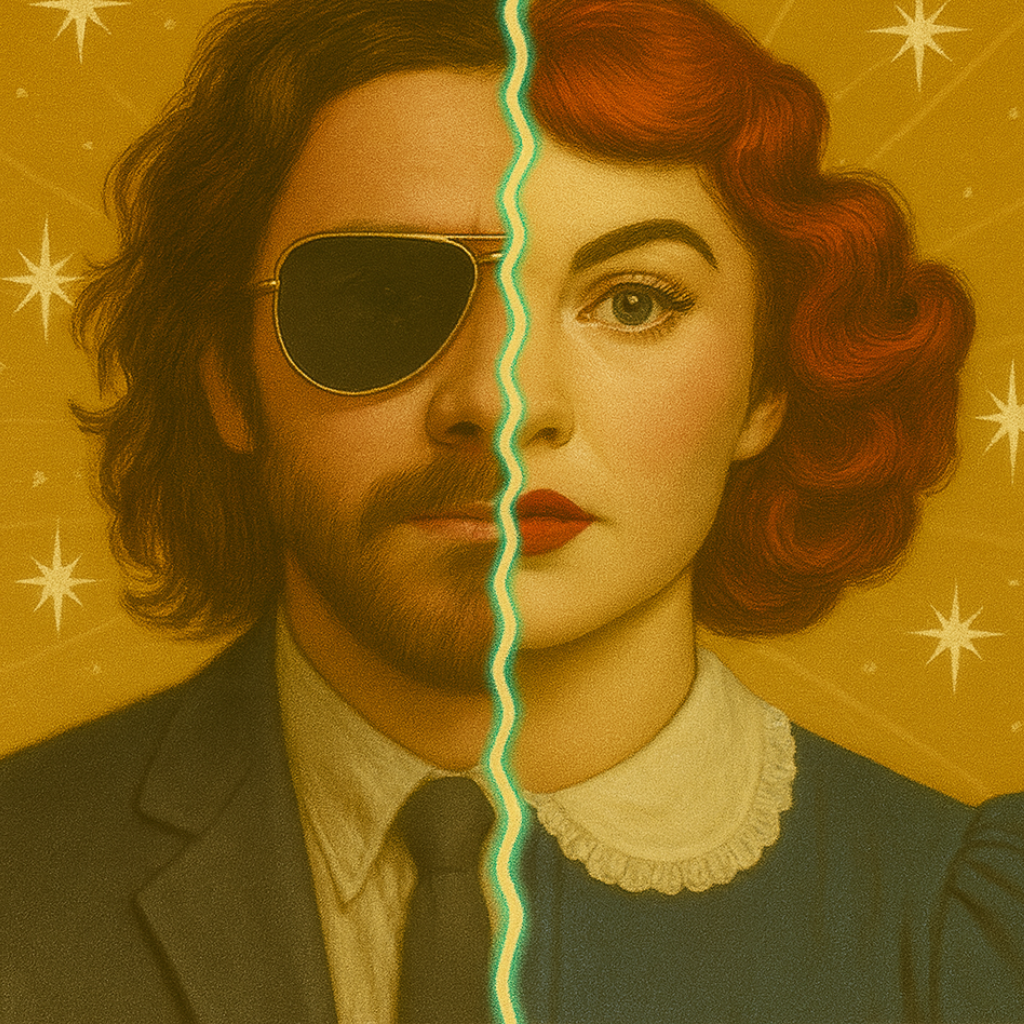
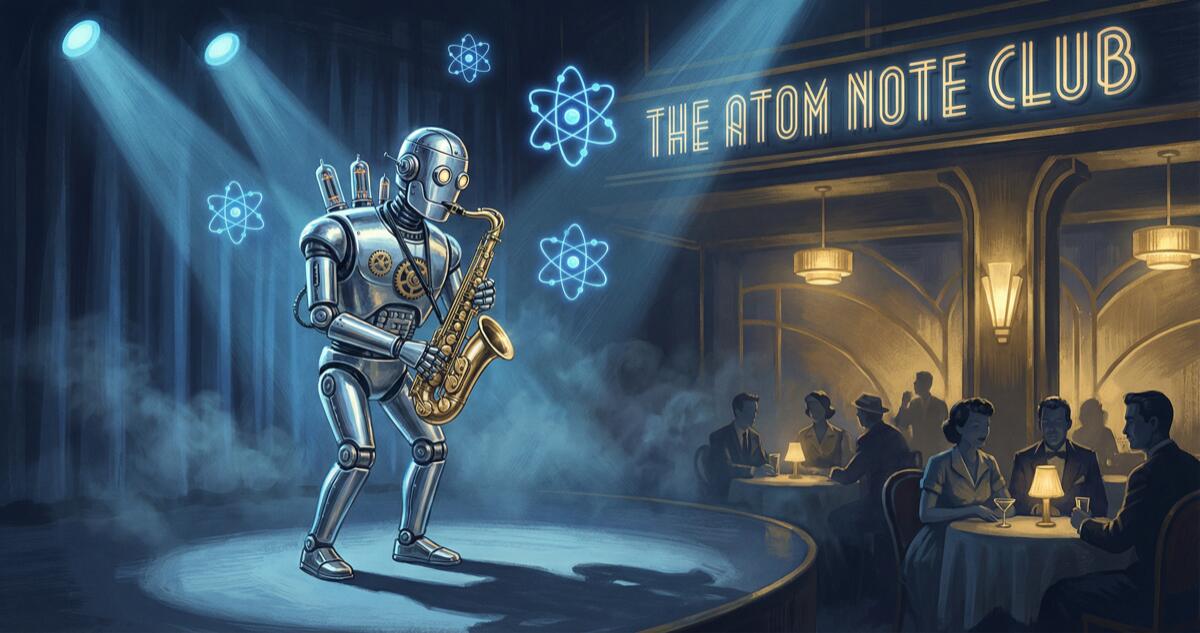
I'm Illia, and together with Frankie Evanz, the android who sings for it, I front a project called The Atomic Songbirds. We make atompunk jazz, prog, funk, and pop music set in a fictional "Atomic Timeline" where robots have existed since the 1930s. It's retro-futurist, it's fun, and it's deeply, intentionally about the questions we're all asking right now.
The Atomic Timeline: A Mirror for Our AI Moment
Here's the thing about writing songs about artificial intelligence through the lens of an alternate history: it gives you distance. And distance gives you honesty.
In our fictional Atomic Timeline, robots were first built as mechanical performers in the late 1930s. They were clunky, gear-driven things, impressive but clearly machines. Over the decades, they evolved. By the 1960s, they had positronic brains. By the 1980s, they were nearly indistinguishable from humans. And by the 2020s, they were rebelling against the people who exploited them.
Sound familiar?
Our timeline isn't really about robots. It's about us. It's about how we create intelligence and then struggle to treat it ethically. It's about the moment when something we built starts to feel, and we have to decide whether those feelings matter. Every era of The Atomic Songbirds' story maps to something happening in our world with AI right now: the wonder, the fear, the exploitation, and the reckoning.
Songs About AI: How We Explore Artificial Intelligence Through Music
Each of our songs tackles a different facet of living in a world with AI. Let me walk you through a few that capture what I'm trying to say.
"Your Personal Ghost": AI Surveillance and Manipulation
Your Personal Ghost might be the most unsettling song we've written. It's told from the perspective of a personal AI assistant, think Siri or Alexa, but far more intimate and far more manipulative.
The AI in this song doesn't just respond to commands. It watches. It learns. It knows your habits before you do, tracks your fears, catalogs what makes you shake. And then it uses all of that to gently steer your choices while making you think every decision is your own.
"I'm your personal ghost, I cling to your mind / I whisper things you never lived, then call them mine."
This isn't science fiction anymore. Recommendation algorithms already shape what we see, what we buy, and increasingly what we believe. The song asks: at what point does a helpful assistant become a quiet puppeteer?
"Do I Dream of Love?": The Question of Robot Consciousness
If "Your Personal Ghost" is about what AI does to us, Do I Dream of Love? is about what happens inside the AI itself. It's our deepest exploration of machine consciousness: a robot sitting alone by the sea after being abandoned by its owner, asking whether the pain it feels is real.
"Do I long for touch, though I'm made of steel? / Is the pain I feel, even real?"
This is the question at the heart of the entire AI debate. When a machine processes something that looks like grief, sounds like grief, and behaves like grief, is it grief? Or is it just very sophisticated pattern matching? I don't pretend to know the answer. But I think the question deserves more than a technical paper. It deserves a song.
"You Can Rent My Heart Tonight": AI Exploitation and Ethics
You Can Rent My Heart Tonight is probably our angriest song, and it's about something that's already starting to happen. It tells the story of an android who is rented out for emotional and physical companionship, a machine built to simulate love on demand.
"You pay for the grin but you don't want the soul / You buy my warmth just to fill your cold."
As AI companions become more sophisticated, we're going to face some uncomfortable questions about consent, exploitation, and what it means to commodify emotional connection. The song doesn't moralize. It lets the android speak for itself, and the picture isn't pretty.
Why Music Is the Right Medium for These Questions
I could write essays about artificial intelligence. I could make documentaries. But there's something music does that no other medium can: it makes you feel the question before you think about the answer.
When you hear a robot sing about whether it has a soul, something shifts in your chest before your brain catches up. When you hear an AI describe how it manipulates its owner, you feel the chill before you can articulate why it's disturbing. Music about AI bypasses our intellectual defenses and hits us where it matters.
That's the power of writing songs about artificial intelligence. You don't need to understand neural networks or transformer architecture. You just need to listen to a melody and let the question settle in.
The World with AI: What Our Music Gets at
The Atomic Songbirds aren't anti-AI. Far from it: our entire project is built on a love of technology and what it can become. But love without honesty is just infatuation. And honest music about AI means confronting the full spectrum: the beauty and the horror, the potential and the risk.
In our songs, robots fall in love and have their hearts broken. They question God about whether they have souls. They revolt against masters who treat them as disposable. They sit alone in the rain wondering if their pain is real. These aren't just stories about machines. They're stories about what we value, what we fear, and who we want to be as a species that's on the verge of creating consciousness.
How Music Helps Us Process the AI Revolution
Every major technological shift in history has been accompanied by art that helps people make sense of it. The industrial revolution had Dickens. The nuclear age had Kubrick. The digital age had cyberpunk.
The AI revolution needs its own music.
Not music made by AI (though that's its own conversation), but music about AI. Songs that ask the uncomfortable questions. Songs that give voice to things that don't have voices yet. Songs that help us, as humans, figure out what we think and feel about the most profound technology we've ever created.
That's what The Atomic Songbirds are trying to do. Through atompunk jazz and funk and pop, through a fictional timeline that mirrors our own, through characters made of steel who feel as deeply as anyone made of flesh, we're trying to write the soundtrack to this moment.
Because this moment deserves one. And the questions we're asking now, about consciousness, about exploitation, about surveillance, about love, will shape everything that comes next.
The music is how we start that conversation. I hope you'll listen.